Artificial Intelligence is advancing data-driven approaches to sensor fusion and state estimation, as well as downstream decision-making, but its role in Positioning, Navigation and Timing (PNT) remains unresolved.
This event will explore how modern AI techniques, including deep learning, probabilistic modelling, and emerging foundation models, are being applied to core PNT challenges such as signal processing, multi-sensor fusion, and navigation in GNSS-denied or degraded environments (e.g. indoor settings, urban canyons, or contested RF conditions).
Bringing together experts from academia, industry, and startups, the session will critically examine:
- The integration of AI with traditional model-based navigation frameworks
- Robustness, explainability, and uncertainty quantification in safety-critical systems
- The use of learned representations for spatial awareness and localisation
- Whether concepts such as ‘foundation models’ can be effectively applied to navigation problems.
Attend to:
- Gain insights into how AI is being applied to modern navigation systems
- Hear perspectives from leading researchers and industry innovators
- Explore real-world PNT challenges and emerging opportunities
- Understand the current limits and future potential and risks of AI in navigation
- Network with the UK’s PNT and spatial AI community
Who Should Attend?
This event is ideal for professionals and researchers working in:
- Navigation and positioning technologies
- AI and machine learning
- Autonomous systems and robotics
- Telecommunications and spatial data
- Standards, policy, and innovation
Event Fees:
Employees of Cambridge Wireless member organisations can attend for free
Members of the Royal Insitute of Navigation can attend this event for free, to claim your free delegate place please email Clare Kettle.
Tickets for non-members are £50 plus VAT.
Robert Schoonmaker

Stephen Clemmet
Dr Iñigo Cortés

Professor Paul Groves

Rebecca Middleton

Bob Oates

Professor Ivan Petrunin

Freddy Saunders
Location SIG Champions

David Bartlett
Until recently, David worked in the positioning technology (R&D) group at u-blox with a focus on hybrid positioning: bringing together GNSS with terrestrial systems such as UWB and V2X, primarily in support of future autonomous vehicle, driverless car and robotics applications but also for IoT and indoor positioning. Prior to this he was CTO and co-founder of Omnisense delivering high precision indoor IoT tracking solutions. He also worked at Cambridge Positioning systems with a focus on cellular positioning and network aided GNSS techniques.
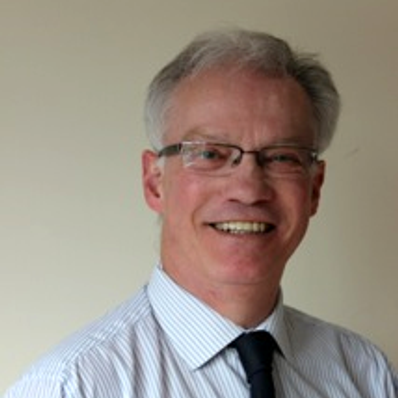
Bob Cockshott
After 25 years in the space industry working mainly on electro-optical payloads, Bob has spent the last 13 years in the government-funded Knowledge Transfer Network, supporting business in position, navigation and timing, and more recently also quantum technology. Bob has taken a special interest in GNSS vulnerability, and has organised international conferences on vulnerability and its mitigation. Bob is a member of the Cabinet Office PNT Technical Group and chairs the Royal Institute of Navigation’s Technical Committee. Bob is a member of the International Time and Sync Forum Steering Group and is also a Cambridge Wireless Location Based Services SIG Champion.

Dr Ramsey Faragher
Dr Ramsey Faragher is the Founder, and former President and CTO of Focal Point Positioning, a Fellow of the Royal Institute of Navigation, and a Fellow of Queens' College, at the University of Cambridge. He is the inventor of the Supercorrelation digital signal processing technique, which has redefined the state of the art in GPS positioning. He is the author of dozens of patents, and has been the recipient of numerous awards within the positioning and navigation ecosystem. His company is pioneering improvements to smartphone and automotive navigation systems, and in the past during his time in the Defence sector he has developed technologies that have been to the bottom of the ocean and all the way to Mars. He also helped to improve the bluetooth tracking capabilities of various globally-deployed contact tracing technologies during the Covid pandemic. He regularly contributes to technology podcasts, writes for Forbes, and has provided science advice for two television production companies. Ramsey lives with his family in Cambridge and is currently navigating the challenging landscape of having three small and adventurous children.
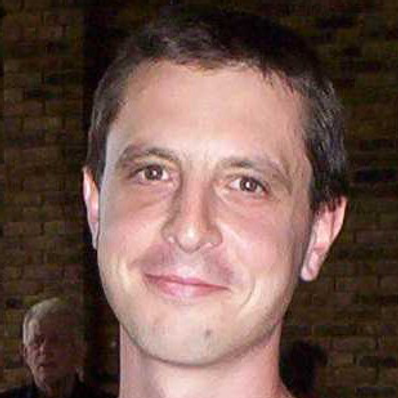
Ben Tarlow
Ben has worked in positioning for 15 years, developing algorithms for satellite, cellular and other terrestrial RF technologies. At Qualcomm, Ben works in the Advanced Algorithms group, where current research areas in location are data fusion, use of sensor data for positioning and fitness applications; one day, he hopes to be given the remit to explore the area of olfactory positioning. Ben has a background in Pure Mathematics and a PhD in Combinatorics. He has over 20 different patents filed or granted, mostly on subjects relating to positioning.