
Quantum & AI



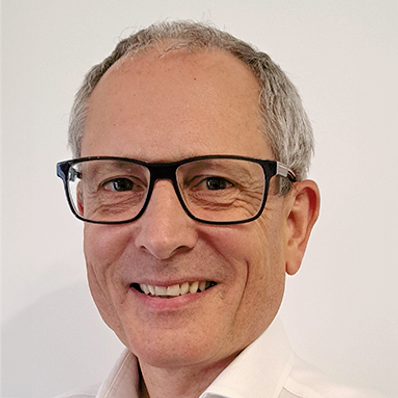


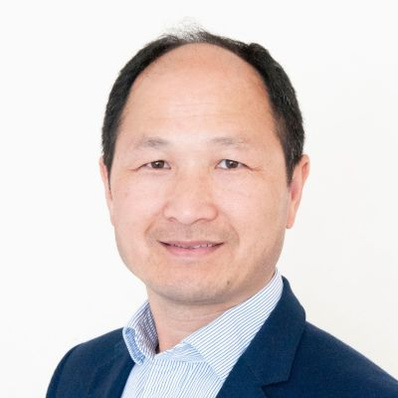

Dr Eloisa Angeles
Eloisa is a Partner of the EdenBase Quantum Fund, where she leads investments in quantum computing and quantum-enabled technologies. She brings nearly two decades of experience across venture capital, growth equity, and deep scientific research, combining rigorous technical fluency with institutional investment expertise.
Eloisa holds a PhD from the University of Cambridge, completed through an industry-sponsored programme with Pfizer. Her research focused on computational modelling, quantum-informed optimisation, and materials prediction — challenges closely aligned with the simulation and optimisation problems quantum computers are being built to solve.
At EdenBase, she has developed a ten category quantum value chain, which underpins the fund’s investment thesis and portfolio construction strategy. She leads all quantum due diligence from both a technical and commercial perspective, and contributes extensively to QBase, the dedicated quantum applications hub in the City of London in partnership with Northeastern University London.
She is also lectures in Entrepreneurship and Innovation at UCL, mentoring founders building at the frontier of science and technology.
Eloisa brings a rare dual perspective across physics and finance, focused on translating frontier research into scalable commercial impact across the UK and European deep-tech ecosystem.
Beverly Clarke MBE
Beverly Clarke MBE is a leading voice in artificial intelligence in education, shaping national and international discourse through her work at the intersection of policy, curriculum, and system-level transformation.
Her insights are informed by direct involvement in high-impact initiatives, including her role as a member of the UK Government Digital, AI and Technology Task and Finish Group, contributions to the CSTA and AI4K12 AI Learning Priorities for All K–12 Students Project, and providing evidence to the All-Party Parliamentary Group on Artificial Intelligence.
Beverly is a specialist in embedding AI across education systems, working with leaders, schools, and organisations to integrate AI into curriculum design, teaching practice, and strategic planning. She is a writer of AI curricula and materials for K–12 and the UK, and a trusted advisor on future-ready education.
Recognised as one of Computer Weekly’s Top 50 Most Influential Women in UK Technology (2025), Beverly combines deep technical understanding with a strong commitment to equity and inclusion. She is also the founder of the non-profit initiative Technology Books for Children and serves as a charity trustee, demonstrating her dedication to widening access to technology education and literacy.
An award-winning author, speaker, and strategist, Beverly empowers educators, leaders, and organisations to drive innovation, build inclusive cultures, and deliver lasting impact. Her work reflects a clear vision for embedding digital capability at system level and shaping a future-ready society.
Vishal Kapoor
Vishal leads the growth of Sendbird's agentic AI portfolio in the EMEA region. He has worked across Asia and Europe in previous roles as the head of commercial for EMEA and, before that, head of commercial for APAC. Across cultures and countries, Vishal has always tried to speak the shared language of business outcomes that technology can deliver.
Jonathan Legh-Smith
Jonathan Legh-Smith is Executive Director for UKQuantum, the association for the UK’s quantum industry. Jonathan represents the interests of UKQuantum members nationally and internationally. Jonathan is also a member of the UK National Quantum Technologies Programme Strategic Advisory Board, the National Quantum Computing Centre Strategic Advisory Committee, UK coordinator for the NATO Transatlantic Quantum Community Industry Network, NPL’s Quantum Strategy Board and co-chair of the UK’s Responsible Quantum Industry Forum. Jonathan was awarded an MBE for services to science & technology in 2024.
Jessica Montgomery
Jessica Montgomery is currently Director of ai@cam, a new University of Cambridge strategic mission to develop AI technologies that serve science, citizens, and society. Alongside this role, she leads a variety of research and policy programmes tackling the real-world challenges associated with developing and deploying AI for societal benefit. These include: Accelerate Science, an initiative developing AI tools and collaborations in support of research and innovation; the Data Trusts Initiative, an incubator programme for pilot projects creating trustworthy data governance frameworks; and strategic research agenda development for the ELISE/ELLIS network of European AI research. Her interests in AI and its consequences for science and society stem from her policy career, in which she worked with parliamentarians, leading researchers and civil society organisations to bring scientific evidence to bear on major policy issues.
- Website:
- ai.cam.ac.uk
Dr Chris Moore
Chris is an independent technology and business growth advisor with experience of supporting start-ups and SMEs from the UK to grow their businesses internationally, and overseas businesses to set-up and grow in the UK.
Prior to this role Chris was a Technology Specialist at the Department for Business & Trade (Infrastructure & Technology Directorate), where he worked with overseas and UK companies. He has expertise in AI, data analytics, cloud, IoT, data centres and cyber security. He has supported technology companies to access opportunities in many sectors including retail, financial services, energy, transport, infrastructure, manufacturing, defence & security. He has also supported the development of policy in AI, Data Centres and Cyber security.
Chris has previously worked for an Open Innovation consultancy, supporting Corporates to work with early-stage companies and universities. Prior to that he worked in Corporate Venture Capital assessing investment opportunities across the European region.
He has over 25 years tech industry experience in research, technology development, manufacturing and marketing in the USA and Europe, with experience of knowledge transfer, innovation, IP assessment, early-stage companies, and developing routes to market. He is based near Cambridge.
Professor Yonghong Peng
Professor Yonghong Peng is a world-leading artificial intelligence scientist, innovation leader, and thought leader in responsible, human-centred, and institutionally grounded AI. He is Professor of Artificial Intelligence and Deputy Dean for Research and Innovation at Anglia Ruskin University, and a Stanford-listed Global Top 2% Most-Cited Scientist.
With more than 25 years of experience spanning artificial intelligence, machine learning, data science, and digital transformation, his work helps organisations and societies harness AI safely, responsibly, and at scale. His research and leadership have centred on the relationship between technology, people, governance, and institutional change.
Previously, he was Professor of Artificial Intelligence at Manchester Metropolitan University, where he established the AI-2030 and Future of AI programmes and developed the MMU–Northern Care Alliance “AI in Health” partnership. He also served as Academic Turing Liaison to The Alan Turing Institute and led national-level research for the Department for Science, Innovation and Technology (DSIT) on cyber security risks to AI.
Based in Cambridge, Professor Peng works across academia, industry, healthcare, and government to support the responsible adoption of AI and the development of AI-native organisations. His current work of Institutional Intelligence focuses on the collective capability of people, knowledge, data, governance, and AI working together to achieve shared goals—and build trusted AI-native platforms that enable organisations to move beyond experimentation towards sustainable impact. He is particularly interested in how human and AI agency collaborate to create more adaptive, resilient, and intelligent institutions for the future.
Kelly Shek
Kelly Shek is COO of QBase, a dedicated quantum applications hub in the City of London, established in partnership with Northeastern University London. She leads strategic partnerships and programme development, spanning executive education, proof-of-concept initiatives, policy roundtables and the ecosystem event series designed to accelerate quantum adoption.
In parallel, Kelly supports the Co-Founders of EdenBase, venture investors in frontier technologies including AI and quantum. She works closely with investors and contributes to the fund’s quantum deal flow and broader ecosystem connectivity.
Kelly brings over 15 years of experience in the investment industry and scaling investment firms. She spent more than a decade at Partners Capital, a global outsourced investment office serving family offices, endowments, and foundations. Her expertise sits at the intersection of capital, strategy and ecosystem development, focused on advancing collaboration across investors, founders, academia and policymakers at the forefront of quantum and AI. Kelly holds an MA in Economics from the University of St Andrews.
MedTech & HealthTech


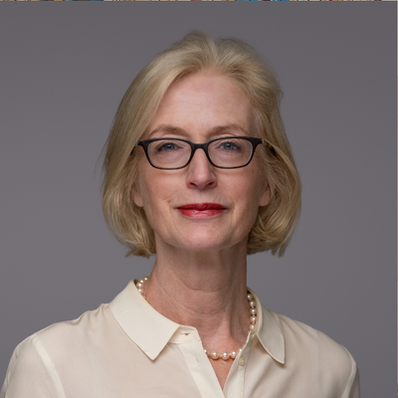
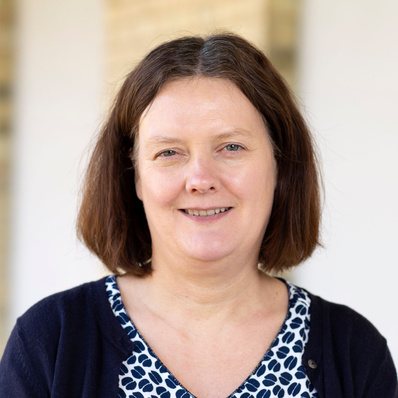
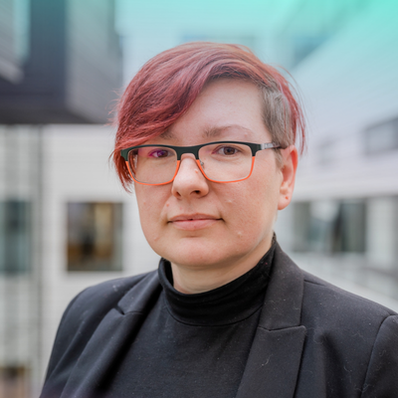

Dr Uday Phadke
Dr Uday Phadke is a distinguished figure in the fields of science, technology, and innovation. He is the co-founder and CEO of Triple Chasm, a company focused on translating science and technology-enabled innovation into commercial impact. Over the past three decades, Dr. Phadke has been instrumental in bridging the gap between academic research and commercial application. His work spans commercial firms, academic research, and the design of national and international innovation initiatives, making him a pivotal figure in the innovation ecosystem.
He holds an MA in Engineering from Trinity College, Cambridge, and a PhD from the University of Sussex. He has founded several technology businesses, including Cartezia, which has helped build over 100 companies in the last 20 years. He was an Entrepreneur in Residence at the Judge Business School, Cambridge University and is the lead author of “Camels, Tigers & Unicorns: Rethinking Science and Technology-enabled Innovation”
He is a Director of The Research & Development Society working on Industrial Strategy and the economics of growth. He is also a non-Executive Director of the Stevenage Bio-Catalyst. He was elected a Fellow of the Royal Society of Arts (FRSA) in 2018.
- Website:
- www.triplechasm.com/
Philip Shelton
Philip joined Health Innovation East in 2020 from Philips and has over 20 years’ experience in life sciences, NHS research, implementation and digital health.
As Director of Industry Partnerships Phil leads our industry facing team to deliver a comprehensive support offer for innovative companies looking to spread and adopt in the NHS. He further leads our non-core work to drive income that we reinvest into the work we do to support innovation in healthcare. Phil has a particular interest in diagnostic imaging and supports the diagnostic imaging, pathology and endoscopy regional networks in their innovation strategies. With a keen interest in Net Zero Phil also supports innovative companies in this space related to healthcare and leads on our international programmes
Jane Aldridge
Jane co-founded Camgenium in 2007, and remained in the leadership team since then. She has led and assisted many diverse MedTech projects including development and deployment of connected medical devices, medical AI risk calculators and an NHS clinical trial. She is involved in Camgenium’s two major activities: certified regulatory compliant techstacks for connected devices that provide security, connectivity, provisioning, reporting and surveillance; and, medical device grade AI products for use in critical healthcare applications, including patient waiting list management and clinical audit. She has a keen interest in regulatory matters and in developing solutions that address the regulatory burden for healthcare innovators.
Dr Anne Blackwood
Anne Blackwood has spent over 21 years turning scientific breakthroughs into real-world healthcare solutions. As Chief Executive of Health Tech Enterprise (HTE), a leading NHS innovation and technology consultancy based in Cambridge, she has led the organisation since 2011, helping life science companies navigate the complex path from discovery to market.
Anne is also Chair of the Medtech Accelerator and co-founded Medovate, a medical device development company, in 2017 — reflecting a career built not just on advising innovators, but on being one.
Before joining HTE, Anne spent four years at Cambridge Enterprise, the University of Cambridge's technology transfer office, where she developed deep expertise in intellectual property management and commercialisation. She holds a PhD in chemistry from the University of Strathclyde, which underpins her ability to engage with complex science at its source.
Dr Agnieszka Iwasiewicz-Wabnig
Dr Agnieszka (Aga) Iwasiewicz-Wabnig FRSA is the Director of the Maxwell Centre at the University of Cambridge, Blue Sky Lead for the Cambridge NeuroWorks ARIA Activation Partnership, Senior Associate of Cambridge Institute for Sustainability Leadership and Fellow of Chapter Zero. Aga’s foundational training in science, with a PhD in Physics, is complemented by executive education from the Stanford Graduate School of Business, where she received the Impact Award for her Stanford LEAD cohort.
Aga conducted research and taught in interdisciplinary nanoscience at Umeå University in Sweden, as well as at Oxford and Cambridge. Since 2009, she has held various roles at the University of Cambridge, unified by super-connecting and strategic knowledge brokerage aspects.
At the Maxwell Centre, Aga leads initiatives that foster knowledge exchange between academia and industry, harnessing the role of science and technology in delivering a robust, healthy society of 2051. She drives a diverse program that spans physical sciences, technology, and beyond, building partnerships across disciplines and sectors around themes of zero-waste/maximum-efficiency, health tech, and inclusive, sustainable AI. She identifies and matches needs and solutions, showcasing the groundbreaking research of academic groups, and enabling policymakers, companies, and entrepreneurs to collaborate meaningfully for the benefit of society.
Adam Igra
Adam joined the Board of Trustees in October 2020.
He has extensive experience across the Health and Social Care sector, having worked in senior operational, strategic and project management roles at several acute and tertiary hospitals, regulators and commissioners, as well as in a private sector management consultancy firm.
Throughout, Adam has specialised in transforming clinical pathways to improve the quality and patients’ experience of care, and reduce the administrative burden on clinical staff. Increasingly this has involved exploiting the opportunities presented by digital technology. In his current role as Director of Innovation at Cambridge University Hospitals, he is working to develop new technologies and ways of working that improve the efficacy, efficiency and experience of patient care. This includes fostering innovation and entrepreneurship within the Trust, but also partnering with external organisations that are at the forefront of clinical research and development in areas such as artificial intelligence, novel devices and genomics, promoting the adoption of innovative technologies that can support staff to deliver better patient care.
Alongside his NHS role, Adam works for a Health Tech company, Phare Health, that is developing AI to automatically and accurately structure unstructured clinical notes in support of clinical coding and other applications. By sitting on both sides of the fence, Adam has a unique perspective on the opportunities – and challenges – represented by healthcare innovation.
Adam is delighted to be supporting the RCPCH as it plays a crucial role in developing the future of care for children and young people.